

Genuine Alaska Pollock Producers
hen the National Marine Fisheries Service (NMFS) shut down the Central Gulf of Alaska pollock season weeks before the season’s end in October 2024, after two vessels incidentally hauled in around 2,000 Chinook salmon as bycatch, it sent shivers through the industry. NMFS figured 50,000 tonnes of the pollock quota were not landed.
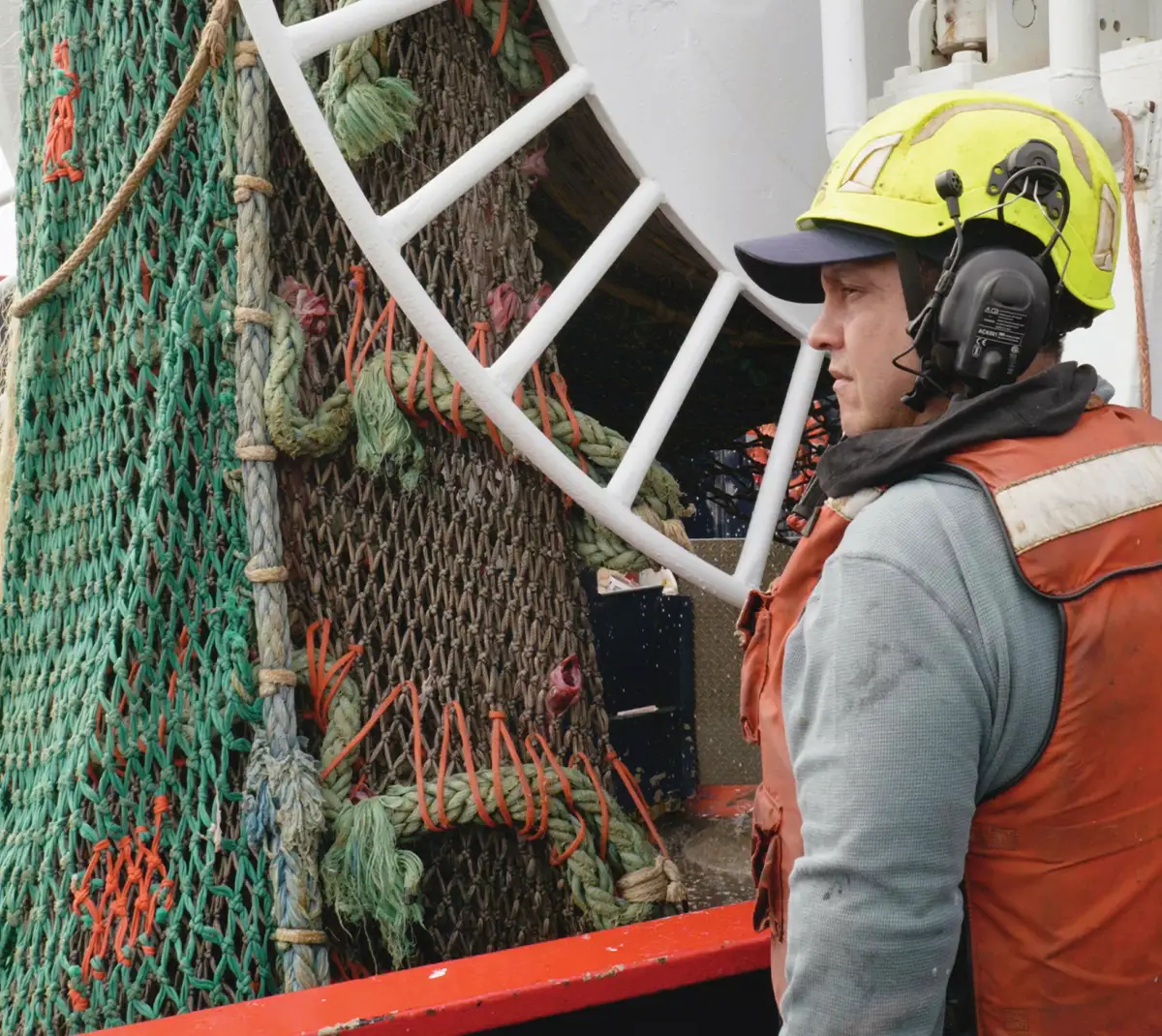
This month, pelagic trawlers, which use a cone-shaped net to catch fish at greater depths, return to homeports with holds filled with fish after receiving a boost in Bering Sea catch limits to 1.375 million tonnes, a 6 percent hike over 2024, and with fisheries in the Gulf of Alaska allowed to target 171,000 tonnes in its 2025 season, according to the North Pacific Fisheries Management Council (NPFMC).
The pollock “A” season, which runs annually from January 20 to April 30, and “B” season running from June 10 to October 31 in the Bering Sea and September 1 to November 1 in the Gulf of Alaska, deeply impact the economies of Unalaska, Kodiak, and small fishing communities throughout Alaska. With last year’s bycatch-related shutdown out of the way, one of the world’s largest fish harvests can resume.
APFA represents stakeholders in the fishery and is guided by a committee of pollock trade associations, harvester companies, customers, and Western Alaska Community Development Quota (CDQ) program representatives, as well as scientific and policy experts, with strategic guidance from the Association of Genuine Alaska Pollock Producers’ board of directors. The CDQ is a federal program that gives eligible communities in Western Alaska a share of the catch from the Bering Sea and Aleutian Islands. Genuine Alaska Pollock Producers is a nonprofit association promoting wild Alaska pollock to major whitefish markets worldwide. These organizations are intent on keeping the pollock fishery front and center as a major economic support for the state and the nation.
The success of the “A” and “B” seasons is critical not only for the pollock fishery but also for the survival of the towns that depend on it to sustain their workforce, families, and future.
“The pollock fishery is both an economic engine and a cultural cornerstone,” says Julie Bonney, executive director of the Kodiak-based Alaska Groundfish Data Bank. “It is not just about catching fish; it’s about sustaining a way of life for thousands of Alaskans and ensuring the survival of communities that depend on the sea.”
The pollock fishery alone contributes nearly $1.5 billion annually in wholesale value, providing products that feed millions worldwide. It also underpins the broader Alaska seafood supply chain, helping to sustain processing plants, container shipping operations, and port services.
Bonney adds, “The pollock fishery supports the workforce and the community infrastructure that all Alaska commercial fisheries rely on. In that way, the success of all Alaska fisheries is linked to the success of the pollock fishery.”
APFA notes that the Alaska pollock fishery also supports 30,000 jobs across the United States, including vessel operators, seafood processors, and distribution, wholesale, and foodservice industry employees.
Alaska produces more than half the fish caught in waters of the United States, with an average wholesale value of nearly $4.5 billion a year, according to the National Oceanic and Atmospheric Administration.
Any decline in the pollock industry could have catastrophic consequences for Alaska’s economy, especially for the CDQ program that coastal communities rely on. The CDQ program allocates a portion of the Bering Sea pollock harvest to sixty-five Western Alaska communities, providing local jobs, funding critical infrastructure, and generating revenue that sustains villages throughout the region.
With more than 30 percent of the Bering Sea pollock industry owned by CDQ groups, the economic well-being of these communities is directly tied to the success of the pollock fishery’s annual harvest.
“The success of the pollock fishery is not only critically important for the jobs it creates, the families it supports, and the communities it sustains but also for the infrastructure and markets it provides for other fisheries like crab, Pacific cod, and sablefish,” says Aleutian Pribilof Island Community Development Association CEO Luke Fanning. “Without this economic engine, the level of resources going into Western Alaska would be greatly reduced. There is no plan B for these communities.”
The total allowable catch and the Alaska pollock biomass has remained relatively consistent over the years—clear evidence of the sustainable, responsible, science-based way the fishery is managed, according to APFA.
NMFS’ research arm the Alaska Fisheries Science Center, the NPFMC’s Science and Statistical Committee, the Alaska Department of Fish and Game, and other fishery scientists provide information to guide the fishery.
“Alaska fisheries, particularly the Alaska pollock fishery, have a tremendous amount of scientific information that guides all management decisions,” says American Seafoods Vice President of Fisheries and Sustainability Trent Hartill.
The Alaska Fisheries Science Center, which conducts annual marine surveys throughout Alaska, prepares an ecosystem assessment of the Bering Sea, Aleutian Islands, and the Gulf of Alaska. The quantity and the quality of information included in that report is unsurpassed, Hartill says.
He adds, “We are fortunate to have an incredible depth of information on everything from the base of the food chain in the Bering Sea all the way up to species-specific growth rates, size, and age of pollock and other groundfish in the Bering Sea. This information is foundational to our conservative approach to management and ongoing sustainability of fish stocks.”
Sustainability is nothing new in Alaska, reports the Alaska Fisheries Development Foundation. Alaska has always been deeply committed to ensuring that its seafood can be enjoyed for generations to come.
To credibly verify what Alaska has been doing for more than fifty years, Alaska seafood companies offer a choice in certification from the Marine Stewardship Council (MSC) or Responsible Fisheries Management (RFM). Both MSC and RFM provide independent, third-party certification of the management of the major Alaska commercial fisheries. Certification provides additional assurance to buyers, markets, and stakeholders that seafood from Alaska is responsibly managed.
Wild Alaska pollock is both MSC and RFM certified, meaning it has been independently verified by the MSC and RFM standards, signifying that the fishery it comes from is managed sustainably and responsibly.

Chelsae Raddell | Genuine Alaska Pollock Producers
Genuine Alaska Pollock Producers
Genuine Alaska Pollock Producers
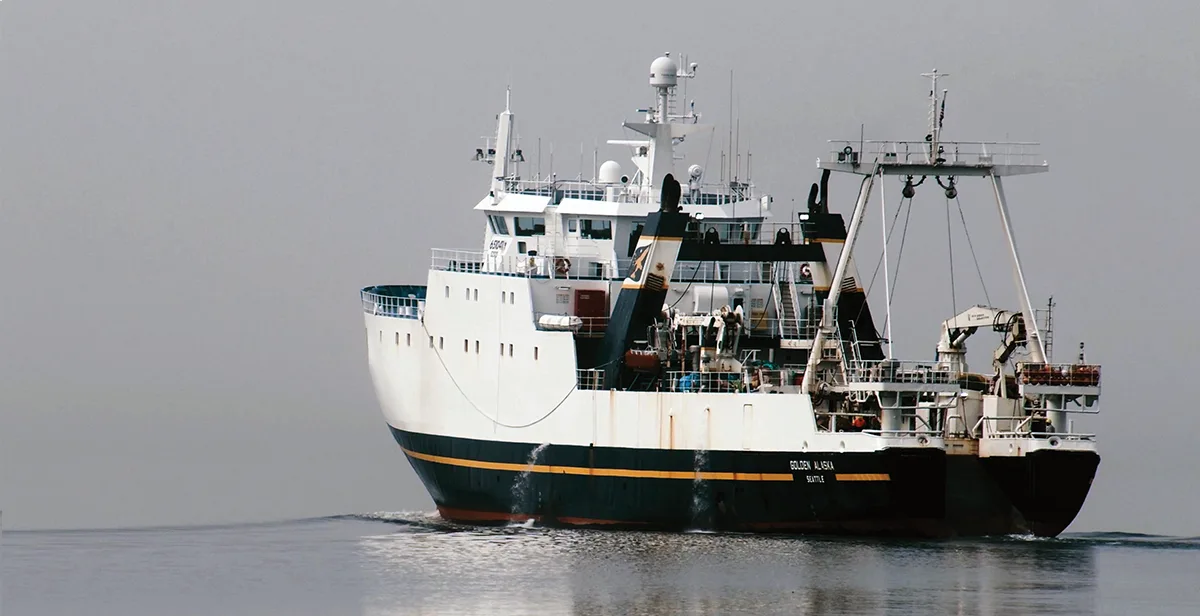
Pollock is a key species for a multitude of value-added products ranging from frozen fish sticks to the Filet-O-Fish sandwich at McDonald’s, a “crispy filet patty made with wild-caught Alaskan pollock.”
“We are headed into this 2025 ‘A’ season with three objectives: safety, salmon avoidance, and efficiency on the grounds,” says B&N Fisheries Captain Dan Carney, who operates a pollock trawl vessel. “We have the tools and knowledge to assure all three. A lot is riding on those priorities, and we will succeed as we have in the past.”
The harvest of Central Gulf of Alaska pollock has been trending up for fifty years, and the powerhouse of the Eastern Bering Sea fishery continues to anchor the state’s seafood harvest.
Carney says, “For most of us, this is not just a job but a way of life, and we will continue to do all we can to sustain that—not only for the pollock fishery but for all Alaska fisheries. We are always fishermen first.”