

Shops
Within
Shops
room for makers
Andrea Beatty | Poppy Lane
or crafters or makers, summer is the obvious time to sell a year’s worth of wares, whether at farmer’s markets, summer fairs, or other opportunities where vendors can set up a table. Fall festivals, winter carnivals, and holiday bazaars offer another bite of the sales apple in the darker months.
For makers who don’t want to spend weekends at summer markets or who are looking for a consistent stream of income, there are other options. A growing number of stores in the Wasilla and Palmer area are mini marketplaces, offering space where vendors can operate as a tiny, year-round storefront.
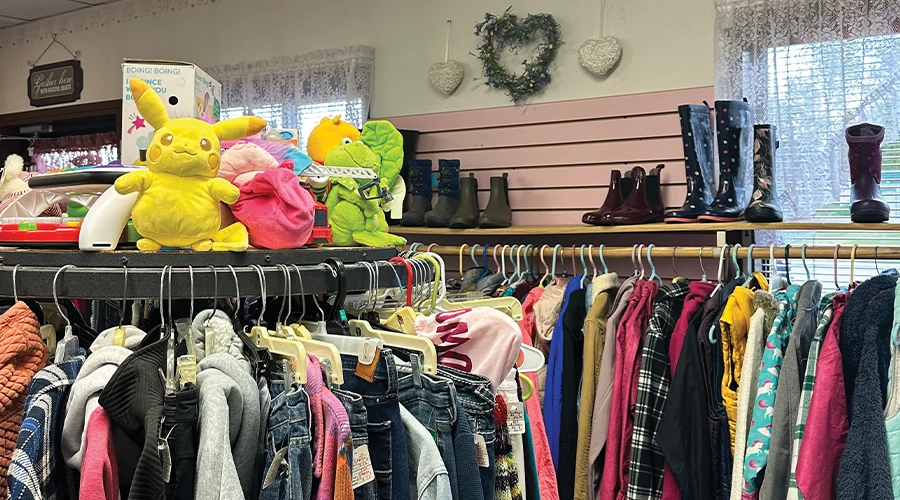
On the fringes of marketplace store arrangements, a few stores offer a consignment model, selling new, handmade, or used items in return for a percentage of the sales. Still others operate on a more traditional consignment model, reselling second-hand clothing or goods and giving a portion of the sales back to consignors. Whether people are hoping to clean out a closet and make a few dollars or are looking for a way to turn their love of antiquing, crafting, or other artistry into a side gig, options abound.
Throughout its time, Poppy Lane has operated as a shop-of-shops, with vendors renting space within the store. Vendors arrange their space how they like it, restock items or refresh the displays, and keep their square footage up to date. Poppy Lane has about thirty-five vendors, Erickson says.
When people come in asking whether the store would like to sell their items, Erickson says she offers to reach out to a current vendor who might be interested in partnering or consigning with that maker.
One of our vendors carries items from different Alaska artists. One has Alaska foods,” she explains. So if someone is interested in selling local jam, Erickson says she might connect them with the food vendor. “We don’t do any consignment,” she says, but she knows of one vendor in Poppy Lane who does use her space to offer consigned items.
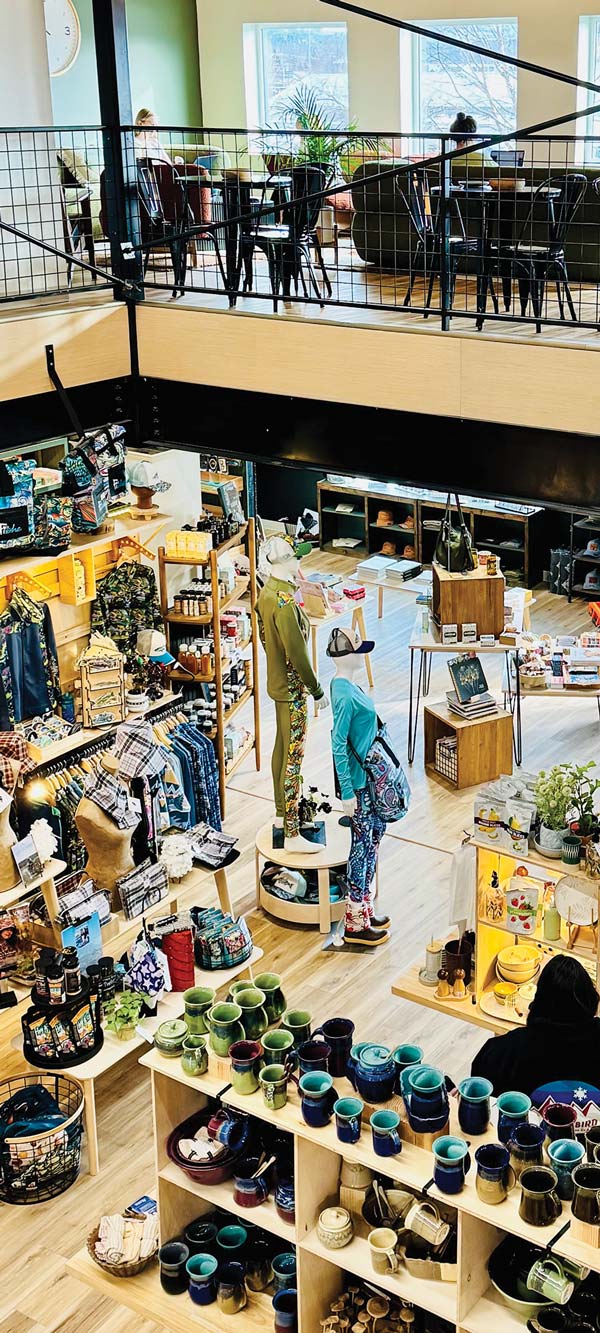
The new store was formerly Carquest Auto Parts. After a two-year renovation, the store is open and airy, with a second-floor mezzanine that is home to Alauda Coffeehouse, along with tables and chairs near windows that show a bird’s eye view of Palmer’s southern downtown area. The additional space allowed Erickson and Hendrickson to rent more vendor space. The expansion has meant continued growth for Poppy Lane—growth Erickson says she hopes will translate to more activity in Downtown Palmer, where two prominent stores along its “main street” strip have closed in the past year.
“The more [stores] you have, the more of a destination it creates,” Erickson says.
From crocheted flowers to handmade lotions, clothing for moms and children and neat antiques, vendor marketplaces and consignment stores offer options to suit all tastes.
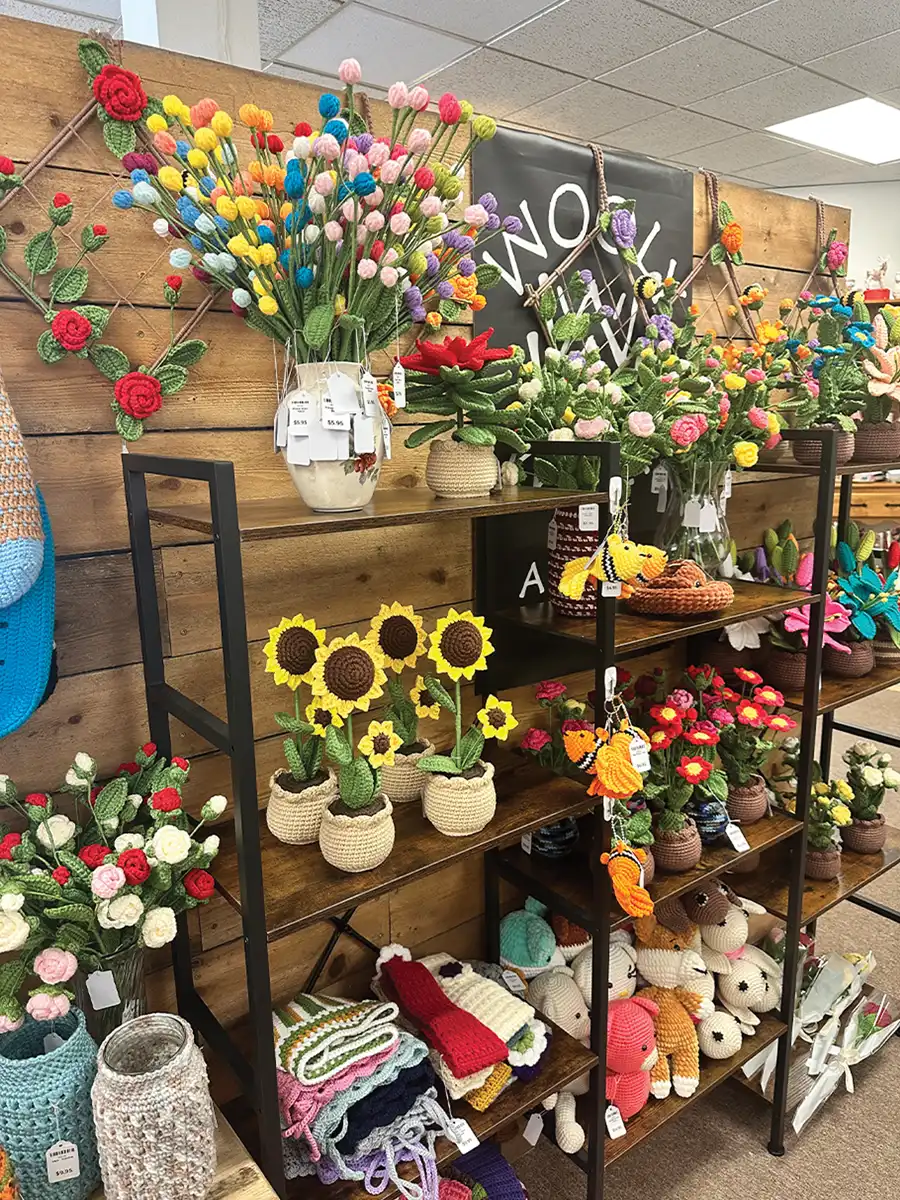
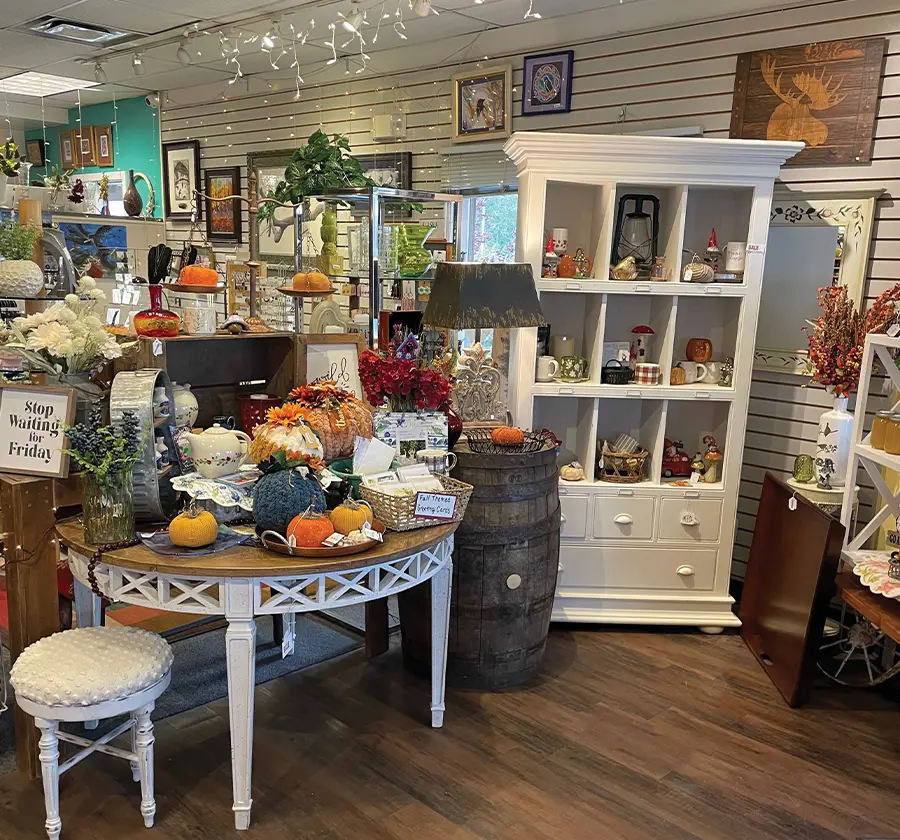
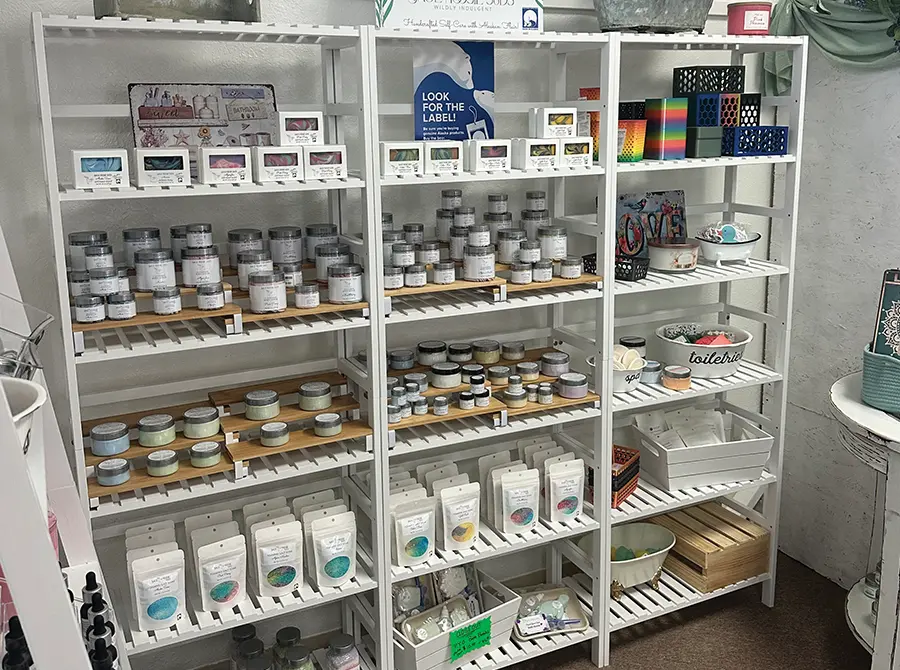


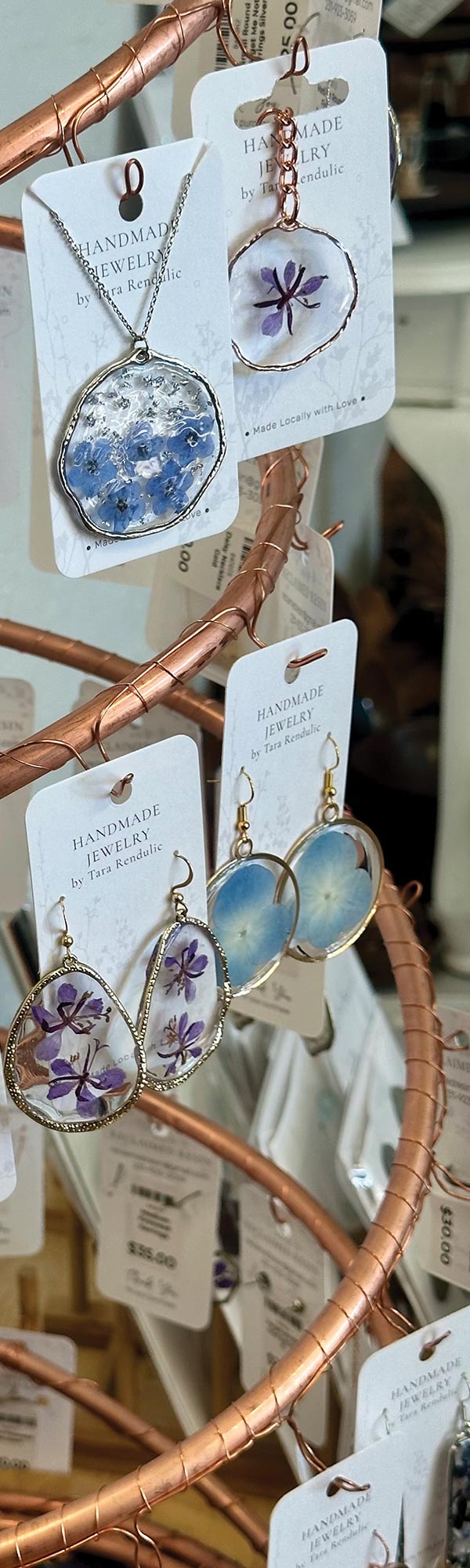

For all that variety, though, Homespun Alley adheres to standards. “They have to fit what we have, as a vibe,” Homareda-Kil says. “We try to go with more handmade or local because people like that.”
Although the store doesn’t have the foot traffic of Downtown Palmer, Homareda-Kil says the busy Colony Plaza shopping center—which also houses a UPS store, barber, thrift shop, accountant, and a laundromat—does lure in customers who might be there on errands.
“The laundromat brings in a lot of out-of-town people, so while they’re waiting, they might stop by,” Homareda-Kil says.
It’s not uncommon for customers to ask how they could be a vendor. Homareda-Kil says the word “rent” sometimes stops them in their tracks. Paying rent to sell your goods?
“When you calculate it per day, it’s like a dollar—three dollars a day, max,” she says, noting that the amount depends on space. Then the store takes a percentage of commission on top of that. For makers who aren’t familiar with the process, it can seem like a lot. But it pays for the space, the lights, staff to ring up the items, cute bags for customers to take them home in—all of that, Homareda-Kil says.
“When you do events, you’re lugging all your stuff in and out, and you might pay $300 a weekend for an event,” she says. That’s just for the table or booth space, never mind the gas, meals, and other assorted costs.
When she started out as a vendor, Homareda-Kil says she too had sticker shock. Her first vendor space in a store cost $100 a month.
“I thought it was a lot of money. It was scary,” she says. But then she calculated what she was already paying out, and the rental made sense.
“As a consigner, as long as I made my rent and the commissions, I was happy—and I had some change left at the end. I was excited to be part of a consignment store,” she says. “Did I make a lot of money? No, but that wasn’t necessarily my goal—it was fun.”
About eighty Alaska consigners’ wares are on display at Wagon Wheel at the moment, she says, mostly focusing on home décor. The store anchors the Land Company building near the Carrs/Safeway in Wasilla. It’s a collection of stores with an Old-West-themed design of false fronts and a wooden porch on two sides of the building.
Some consigners offer just a few items, Tingstrom says, while others, such as Alaska Sausage and Seafood, have a variety of products for sale.
“We have a combination of things. We have Alaskan crafters—not all of that is consignment; some of them we buy directly from. Some people bring us antiques, and we buy those. We also order things that are handmade in America, and we have things that are from wholesale catalogs, made in other countries,” she says. “We try to focus on things made in Alaska first, including antiques and furniture. Some of that is on consignment; part of that is it’s just how we started.”
“Growing up, my parents had a similar shop here in Wasilla… giving me the idea to have a store that is a unique blend of décor, furnishings, and giftables both old, new, handmade and commercially made as well. One of my visions is to keep making my corner of the world a better place in all ways.”
“Now people approach me,” she says, adding that she still goes to shows and markets to see what’s popular. She says she’ll frequently give makers a test run, allowing them to bring items and see if they sell. If something doesn’t sell in four to six months, maybe there’s a better home for it. While Tingstrom doesn’t rent designated spaces—she likes to have the freedom to design the store her way—the store collects a percentage from items sold on consignment.
Tingstrom notes that consignment isn’t the right fit for every maker, and her store isn’t the right fit for everyone who approaches her about consigning. But she tries to offer suggestions for a spot that might be a better fit. She has a heart for the people who make Wagon Wheel what it is.
“Growing up, my parents had a similar shop here in Wasilla, and those memories have always tugged at me, giving me the idea to have a store that is a unique blend of décor, furnishings, and giftables both old, new, handmade and commercially made as well. One of my visions is to keep making my corner of the world a better place in all ways,” Tingstrom says on the Wagon Wheel Marketplace website.
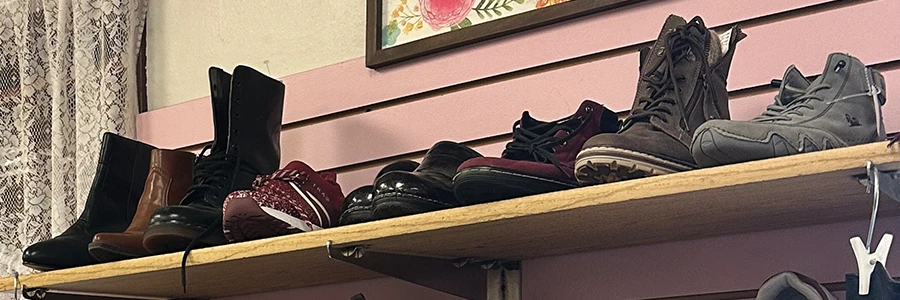
Located in Wasilla Business Park, a long, brown concrete strip mall across the street from Nunley Park, Mouse House has been reselling women’s and children’s clothing and accessories since 1981.
“It’s generational now. People are coming in, saying they used to come in with their mom,” owner Faye Hulke says.
For the past twenty-four years, Hulke has been at the cash register. Hulke says her store has a pretty straightforward operation: people bring items to her, she sorts through and decides what to keep, makes out a hand-written ticket, and hangs the items for sale. If an item sells, she keeps track of it so the consigner can use the amount for store credit or get cashed out. And it operates on cash or check only—no credit cards.
“If it isn’t broken, I don’t think I should fix it,” Hulke says. “I do things the old-fashioned way.”
But don’t confuse old-fashioned with out of touch. Hulke does a fairly brisk business turning over gently used clothing for growing families. As a mom of seven, she is more than aware that, just when parents think they have all the clothing a growing family needs, someone grows an inch overnight and is in need of a new wardrobe.
Perhaps as important as providing clothing for a modest price, Hulke says the store is a gathering spot for parents.
“It’s a pretty social place. Some people just come in to talk,” she says. “It’s just a little spot here in the middle of town, minding its own business.”