

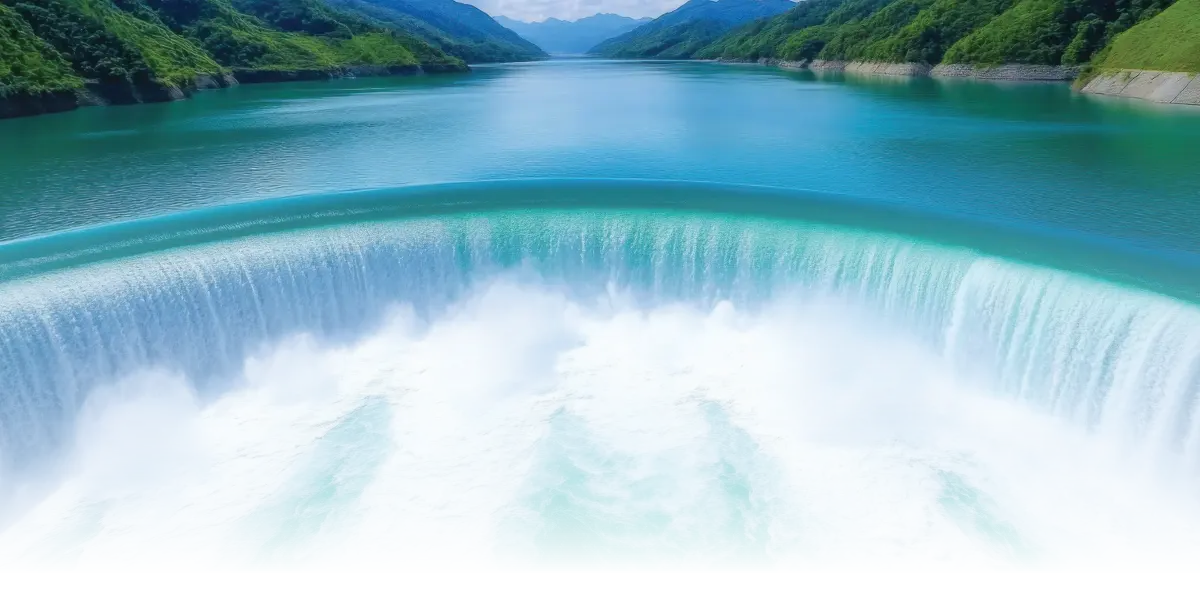
he Nuyakuk River Hydroelectric Concept is a proposed run-of-river hydroelectric development that aims to deliver electricity and enhanced broadband access to six northern Bristol Bay communities: Aleknagik, Dillingham, Ekwok, Koliganek, Levelock, and New Stuyahok. The project site is at Nuyakuk Falls, approximately four miles downstream of Tikchik Lake on the Nuyakuk River within Wood-Tikchik State Park, and will occupy 357 acres of US Bureau of Land Management land.
The project would consist of an intake structure, power conduit, powerhouse forebay, powerhouse, and tailrace channel approximately 4.5 miles downstream of the Tikchik Lake outlet above a natural waterfall on the Nuyakuk River. The project’s river intake would divert water from the Nuyakuk River above Nuyakuk Falls to a powerhouse near the base of the falls.
Based on more than sixty years of federally sourced site-specific flow data, the run-of-river project could produce up to 12 MWh year-round. The seasonal generation capacity matches, or exceeds, the demand for power in the six communities and would replace up to 1.5 million gallons of diesel fuel each year.
With the rising cost of transporting diesel fuel and the inherent risk of oil spills in connection with that transport, hydroelectric power offers many financial and environmental advantages. However, as the name suggests, the project is still at the conceptual phase. Numerous studies are required, permits must be granted and, perhaps most important, the commercial fishing industry in the Bristol Bay region must be protected.
The project also has the potential to open land for supplementary renewable energy sources that would complement the project’s base load resources. This initiative creates new opportunities for local communities, which presently rely entirely on diesel generation fueled by barges through the Nushagak River and Kvichak River drainages to the designated locations. By decreasing fuel transportation via waterways and minimizing storage requirements, the project will mitigate the risk of environmental damage due to spills.
Another significant complexity of diesel-generated power lies in monitoring emissions. “We have to pay by the ton for emissions that have been put in the atmosphere,” explained Lisac. “Also, the Alaska Department of Environmental Conservation requires that we hire a company to monitor those emissions. So over the past seven-year period, we spent over $1.8 million just monitoring and paying by the ton for those emissions.”
Several of the modifications centered around the Fish and Aquatic Resource Studies and the Subsistence Study. For example, with the Nuyakuk Falls Fish Passage Study, the FERC recommended the study plan be modified to require Nusghagak Cooperative, when conducting in-person meetings for the Subsistence Study, to also request any tribal knowledge on fish migration timing or passage through Nuyakuk Falls, particularly as it may relate to low flow conditions. The FERC also recommended modifying the study plan to require Nusghagak Cooperative to include adult salmon spawning and juvenile rearing habitat for salmon in the fish habitat modeling analyses.
Another modification involved the Subsistence Study. The FERC recommended that the study plan be modified to require Nushagak Cooperative to schedule in-person meetings with tribal elders and other tribal members knowledgeable in subsistence activities in Koliganek, New Stuyahok, Ekwok, Aleknagik, Levelock, and Dillingham.
The initial studies for the project commenced in 2020 with the initial development of the study plans. From 2021 to 2023, the focus was on assessing seasonal impact. In late 2023, Nushagak Cooperative submitted a license application to the FERC. The operating license was issued in early 2024, allowing the project to progress.
In December 2024, Nushagak Cooperative released a report comprising two years of research across nineteen different study areas, including a botanical and wetland study, a caribou population evaluation, and a Nuyakuk Falls fish passage study. At the time of this writing, three of the nineteen studies were still underway: the aesthetic study, the Chinook and salmon life cycle modeling study, and the subsistence study.
From 2024 through 2026, Nushagak Cooperative aims to secure additional operating permits and licenses, including a Wood-Tikchik State Park operating permit, transmission line right of way, and water rights. Assuming the necessary permits and licenses are secured and funding is in place, construction is anticipated to commence in 2026, with completion expected by 2028. The cost of the studies is estimated at $6 million, while the total project cost is estimated to range between $120 million and $140 million.
Despite the significant cost and time required to complete the Nuyakuk River Hydroelectric Concept, Nushagak Cooperative remains enthusiastic about the potential and looks forward to conducting the necessary studies to evaluate its feasibility and value to the region.
In a statement regarding the concept vision, Nushagak Cooperative noted, “Hydroelectric concepts in Alaska have a successful history of providing electric rate reduction, reduced dependence on fossil fuels, carbon emissions mitigation, and longevity. Several hydro facilities in Alaska have been in operation for more than a century, and many more are currently displaying the same type of longevity potential. We believe the combination of renewable energy and increased broadband access will provide the basis for economic and social improvement and growth in the region for generations to come.”